Google Indexing Tool: How to Get Pages Found — and Keep Them There
Published doesn't mean indexed. This guide covers why Google skips pages, the best google indexing tool options in 2026, and how Linkbot's Priority Indexer solves it.
Google Indexing Tool: How to Get Your Pages Found (and Keep Them There)
You published the page. You optimized the title tag, structured the headings, built out the content. And then you waited. Days passed. A week. The page still doesn't appear in Google search results — not for your target keyword, not for your brand name, not for anything. It's as if the page doesn't exist.
This isn't an anomaly. It's a systematic problem. Google crawls and indexes a fraction of the pages on the web at any given time, and the selection process is less transparent than most site owners realize. Pages can sit in limbo — published but invisible — for days, weeks, or indefinitely, depending on how well the site signals importance to Google's crawlers.
The good news: indexing problems are solvable, and the tools and tactics to solve them are available right now. This guide breaks down exactly why Google skips pages, how the indexing pipeline actually works, and which google indexing tool options give you the most reliable control over when and how your content gets found.
Why Google Doesn't Index Every Page You Publish
Most site owners assume that publishing a page is sufficient for it to enter Google's index. It isn't. Google operates a multi-stage pipeline — crawl, render, index — and content can fail at any point. Understanding where and why pages fall through helps you fix the right thing.
Crawl Budget Constraints
Every site gets a crawl budget: a finite allocation of crawl activity that Googlebot will spend on the domain over a given period. Larger, more authoritative sites get more crawl budget. Smaller and newer sites get less. When a site has more pages than its budget allows Googlebot to crawl efficiently, Google makes choices about which pages to prioritize — and recently published, poorly-linked pages often lose.
Crawl budget is influenced by two factors: crawl rate limit (how fast Googlebot can crawl without overloading your server) and crawl demand (how much Google believes your content is worth crawling, based on signals like PageRank, update frequency, and user demand). Pages with few inbound links and low PageRank score low on crawl demand — and may be skipped entirely in a given crawl cycle.
Orphaned Content
An orphaned page has no internal links pointing to it. For Googlebot, links are roads. Without roads leading to a page, the crawler has no way to discover it during a routine site crawl — even if the page is technically accessible and listed in your sitemap. Sitemaps help, but Googlebot treats them as hints, not mandates. Internal links are authoritative signals of importance; sitemaps are navigation aids.
Orphaned content is more common than most teams realize. Pages get published without being linked from any existing content, or old internal links get removed during a redesign without anyone auditing what now points to nothing. The result is a growing graveyard of published-but-invisible pages.
Thin Content and Duplicate Signals
Google's quality thresholds mean that pages with thin content — little original information, shallow coverage, or near-duplicate text — may be crawled but not indexed, or indexed and then removed from the index during a quality evaluation. Pagination pages, tag archives, filtered product views, and auto-generated content all commonly trigger this outcome.
Poor Internal Link Structure
Even when pages aren't fully orphaned, a weak internal link structure creates indexing delays. If a new page is linked only from a single low-authority page buried deep in the site hierarchy, Googlebot may not reach it often. The fewer pathways a crawler has to reach a page — and the lower the authority of the pages on those pathways — the lower the crawl priority that page receives.
This is where internal linking and indexing intersect directly: a strong internal link structure doesn't just help users navigate. It shapes which pages Google crawls, how often, and in what order.
How Google Discovers and Indexes Pages
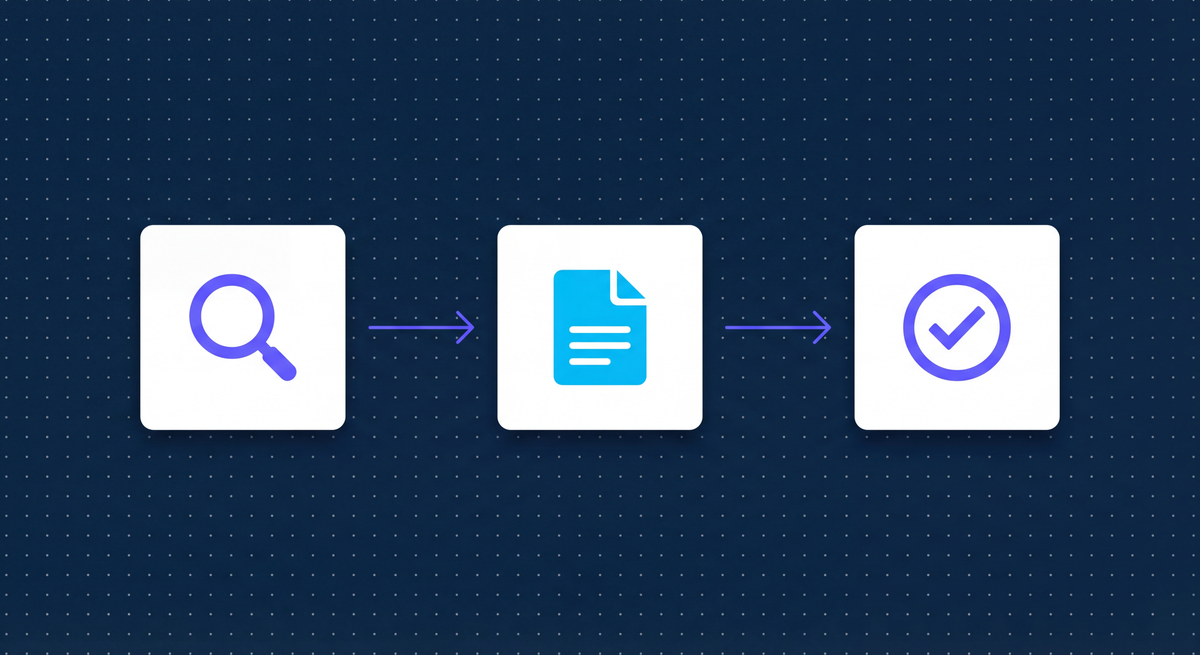
Google's indexing pipeline has three distinct stages, and a page must pass all three to appear in search results.
Stage 1 — Crawl: Googlebot follows links from already-known pages to discover new URLs. It also reads XML sitemaps submitted through Google Search Console as a secondary discovery mechanism. Crawled URLs are added to a processing queue.
Stage 2 — Render: Google renders the page as a browser would, executing JavaScript and building the full DOM. Pages with heavy JavaScript dependencies may face rendering delays — Google processes rendered pages in a second wave, sometimes days or weeks after the initial crawl. This is why JavaScript-rendered content frequently indexes slower than server-rendered HTML.
Stage 3 — Index: Google evaluates the rendered content against quality signals and decides whether to add it to the index, with what content, and under which canonical URL. A page can pass crawl and render and still fail indexing due to quality thresholds, duplicate content issues, or canonical tag conflicts.
Each stage introduces potential delays and drop-off points. The fastest path through the pipeline requires: easy crawler access, clean HTML rendering, strong inbound internal links, unique content, and clear canonical signals.
Manual Indexing Tactics That Actually Work
Before reaching for a dedicated google indexing tool, there are foundational tactics that reliably accelerate indexing for individual pages. These don't replace automation at scale, but they're important to understand because good tooling builds on top of them.
Google Search Console URL Inspection
The URL Inspection tool in Google Search Console lets you request indexing for individual URLs. Submit the URL, trigger a crawl request, and Google typically processes it within a few days. This is the most direct manual method and works well for single high-priority pages — a new product launch, a freshly updated cornerstone article, a time-sensitive announcement.
Its limitation is scale. GSC allows approximately 10–12 indexing requests per day per property. For sites publishing frequently or with large existing content libraries to reindex, this ceiling is hit quickly.
XML Sitemap Submission
Submitting an updated XML sitemap via Google Search Console signals to Googlebot that new or changed content is available. Google reads sitemaps regularly once submitted, though it treats them as discovery hints rather than indexing guarantees. Sitemaps are most effective when combined with strong internal linking — the sitemap tells Google where new content is, and the internal links tell Google how important that content is.
Internal Linking as a Crawl Signal
Adding internal links to a new page from already-indexed, high-authority pages on the same site is one of the most reliable indexing accelerators available. When Googlebot next crawls the linking page — which it does frequently if that page has established authority — it discovers the new URL through the link, increases its crawl priority estimate, and adds it to the processing queue with higher urgency than a sitemap-only signal would achieve.
This is why automatic internal linking has a direct impact on indexing speed, not just ranking. A system that continuously builds links to new content from established pages is also continuously signaling to Google that those new pages deserve attention.
Fetch and Render Testing
Before worrying about indexing, confirm that Googlebot can actually see your content. Google Search Console's URL Inspection tool shows you exactly what Googlebot sees when it renders your page — including whether JavaScript content loads correctly. If the rendered view is missing content that appears in the browser, you have a rendering problem that will prevent proper indexing regardless of other tactics.
How Internal Links Accelerate Indexing
The relationship between internal linking and indexing is one of the most consistently underappreciated levers in technical SEO. Most practitioners know that internal links help with rankings by distributing PageRank. Fewer recognize the direct crawl mechanics at play.
When Googlebot crawls a page, it follows every internal link it encounters. The more internal links point to a target URL — especially from pages that Googlebot visits frequently — the more often that URL enters the crawl queue. Pages with high internal link equity aren't just ranked better; they're crawled more frequently, indexed faster, and reindexed more quickly after updates.
The practical implication: publishing a new page and immediately linking to it from 5–10 relevant existing pages with established authority compresses the indexing timeline from weeks to days. The same principle applies to updated content — adding or updating internal links to a refreshed page accelerates Google's recognition of the new version.
A sound internal linking strategy that systematically connects new content to existing authority pages is, in effect, also an indexing acceleration strategy. The two are inseparable at scale.
The Best Google Indexing Tools in 2026
The market for indexing tools ranges from Google's own free infrastructure to third-party indexing services and integrated SEO platforms. Here's how the main options compare.
| Tool | Method | Daily Limit | Scales Automatically | Pairs with Internal Linking | Best For |
|---|---|---|---|---|---|
| Linkbot Priority Indexer | Internal link signals + Indexing API | No hard cap | ✅ Continuous | ✅ Native | Sites needing reliable indexing at scale |
| Google Search Console | URL Inspection / manual request | ~10–12 URLs/day | ❌ Manual only | ❌ No | One-off high-priority pages |
| Google Indexing API | Direct API push | 200 URLs/day | ⚠️ Requires dev setup | ❌ No | Job posting / livestream schemas (limited official use) |
| IndexMeNow | Third-party ping network | Varies by plan | ⚠️ Semi-auto | ❌ No | Volume indexing requests outside GSC limits |
| Omega Indexer | Third-party ping network | Varies by plan | ⚠️ Semi-auto | ❌ No | Backlink and page indexing requests |
| Screaming Frog + GSC | Crawl audit + manual submission | ~10–12 via GSC | ❌ Manual | ❌ No | Identifying unindexed pages for manual action |
Third-party ping services like IndexMeNow and Omega Indexer work by submitting your URLs to Google through various API endpoints and content discovery networks. They can increase indexing throughput beyond GSC's manual limits, but they operate in a gray area of Google's terms of service and produce inconsistent results. More importantly, they treat indexing as isolated from site structure — which misses the deeper mechanism.
The Google Indexing API is Google's official programmatic indexing interface, but it's officially scoped to job postings and livestream events. Using it for general content is technically outside its intended use case, though many SEOs report it working for standard pages. It requires developer setup and doesn't address crawl demand signals — it only submits URLs, not the authority signals that determine how Google prioritizes them.
Linkbot Priority Indexer: A Closer Look
Linkbot approaches the indexing problem differently from standalone tools because it treats internal linking and indexing as a unified system rather than two separate concerns. The Priority Indexer feature is built on top of Linkbot's internal link automation — which means when it pushes a page for indexing priority, it simultaneously ensures that page has the internal link signals Google needs to recognize it as worth crawling.
How It Works
When you publish a new page or identify an existing page that isn't indexed, Linkbot's Priority Indexer triggers two actions simultaneously. First, it submits the URL through the appropriate API pathway to request crawl attention. Second — and this is the differentiator — it ensures the page has active internal links pointing to it from already-indexed, authority-passing pages on the site.
The combined signal is significantly stronger than either action alone. A URL submission without supporting internal links asks Google to crawl a page it has little reason to prioritize. Internal links without an indexing request rely entirely on Googlebot's next natural crawl cycle. Together, they create the conditions for fast, reliable indexing: a direct crawl signal backed by site authority.
Continuous Coverage
Unlike manual GSC submissions, Linkbot's indexing coverage runs continuously. Every new page published to your site enters the indexing workflow automatically — no manual queue management, no remembering to submit individual URLs, no per-day limits eating into your throughput. For content-heavy sites publishing frequently, this means zero indexing lag on new content and continuous reindexing coverage for updated pages.
For agencies managing multiple client sites, this eliminates an entire recurring task from the workflow. Review the internal linking tools guide for a full comparison of how Linkbot fits into an agency's broader automation stack alongside other specialized tools.
Before and After: What Priority Indexing Looks Like in Practice
Consider a content-focused SaaS site publishing three new blog posts per week. Before implementing systematic internal linking and indexing tooling, the pattern typically looks like this:
- Posts published Monday → Googlebot discovers via sitemap 4–10 days later
- Rendering completes 2–5 days after crawl
- Index inclusion: 1–3 weeks after publish, sometimes longer
- Several posts per month never indexed at all (orphaned or low-priority)
After implementing Linkbot with Priority Indexer active:
- Posts published Monday → internal links added automatically within hours from 4–8 relevant existing pages
- URL submitted to indexing pipeline on publish
- Googlebot crawl: typically within 24–72 hours
- Index inclusion: 2–5 days for most content
- Orphaned content: eliminated — every new page has active internal links
The compounding effect matters here. Faster indexing means earlier ranking data, earlier traffic, and earlier opportunities to iterate on content that's underperforming. Sites that index slowly lose the feedback loop that lets them improve content while it's still new.
This is especially valuable for agencies managing client sites across a range of authority levels. On a brand-new site with limited crawl budget, the difference between a 3-day index time and a 3-week index time is the difference between a campaign that shows early results and one that requires explaining to a client why their content isn't showing up yet. Pairing this with the broader capabilities covered in the best SEO automation tools for agencies guide gives a complete picture of what automated infrastructure looks like across an agency client base.
Frequently Asked Questions
What is a google indexing tool?
A google indexing tool is software that helps you get your web pages discovered, crawled, and added to Google's search index faster and more reliably than passive methods (like waiting for Googlebot to find pages naturally). Tools range from Google Search Console's URL Inspection feature to third-party services that submit URLs through the Google Indexing API or supplemental crawl networks. The most effective tools combine indexing requests with internal link signals that improve crawl demand.
Why are my pages not being indexed by Google?
The most common reasons are: no internal links pointing to the page (orphaned content), crawl budget exhaustion on large sites, thin or duplicate content triggering quality filters, JavaScript rendering delays, and canonical tag issues redirecting index credit to a different URL. Use Google Search Console's Coverage report and URL Inspection tool to diagnose which stage of the pipeline your pages are failing at.
Does Google Search Console's URL Inspection tool guarantee indexing?
No. Requesting indexing via GSC's URL Inspection tool signals to Google that you want the page crawled, but Google still applies its quality and relevance criteria before adding a page to the index. Pages with thin content, duplicate signals, or technical issues may be crawled but not indexed even after a request. Fixing the underlying content and link structure is always necessary alongside the indexing request.
How long does it take Google to index a new page?
For well-linked pages on established sites, indexing typically takes anywhere from a few hours to a few days. For new sites, new pages with few internal links, or sites with limited crawl budget, indexing can take weeks or may not happen without intervention. Pages submitted through Google Search Console's URL Inspection tool or indexed via Linkbot's Priority Indexer typically index within 2–5 days.
Is the Google Indexing API available for all content types?
Officially, the Google Indexing API is only supported for job postings and livestream event schema types. However, many SEOs use it for general content pages and report positive results. Google has not explicitly prohibited this, but it's outside the documented use case and results can be inconsistent. Tools like Linkbot that pair internal linking signals with indexing requests offer a more reliable and terms-compliant approach.
Get Your Pages Into Google's Index — and Keep Them There
Indexing delays aren't just a technical inconvenience. Every day a page isn't indexed is a day it can't rank, can't earn clicks, and can't contribute to your site's authority. For sites publishing frequently, or for agencies managing multiple client properties, the compounded cost of slow or incomplete indexing is substantial.
The solution isn't choosing between manual GSC submissions and third-party ping services. It's addressing the underlying signals that determine Google's crawl priorities: internal link structure, crawl demand, content quality, and technical accessibility. Tools that fix those signals — rather than just submitting URLs into a queue — produce indexing outcomes that are faster, more consistent, and more durable.
Linkbot's Priority Indexer works because it doesn't treat indexing as a separate problem from internal linking. New content gets internal link signals and an indexing push simultaneously — the two actions that together make the strongest possible case to Google that a page deserves immediate attention.
If you're managing a site where content regularly goes unindexed, or where indexing delays are stretching into weeks, it's worth looking at the full picture: link structure, crawl budget, content quality, and the tools that automate the signals that make indexing fast and reliable. Start at linkbot.com.
Related resources
- URL Inspection Tool (indexing diagnostics)
- Validate your sitemap (avoid discovery issues)
- robots.txt wildcard rules
- Crawling vs indexing (what’s the difference?)
- Best internal linking tools
Try Priority Indexer (14-day free trial)
Linkbot’s Priority Indexer helps get your pages indexed faster by boosting unindexed URLs with strategic internal links.
Start here: Start a 14-day free trial (cancel anytime).